
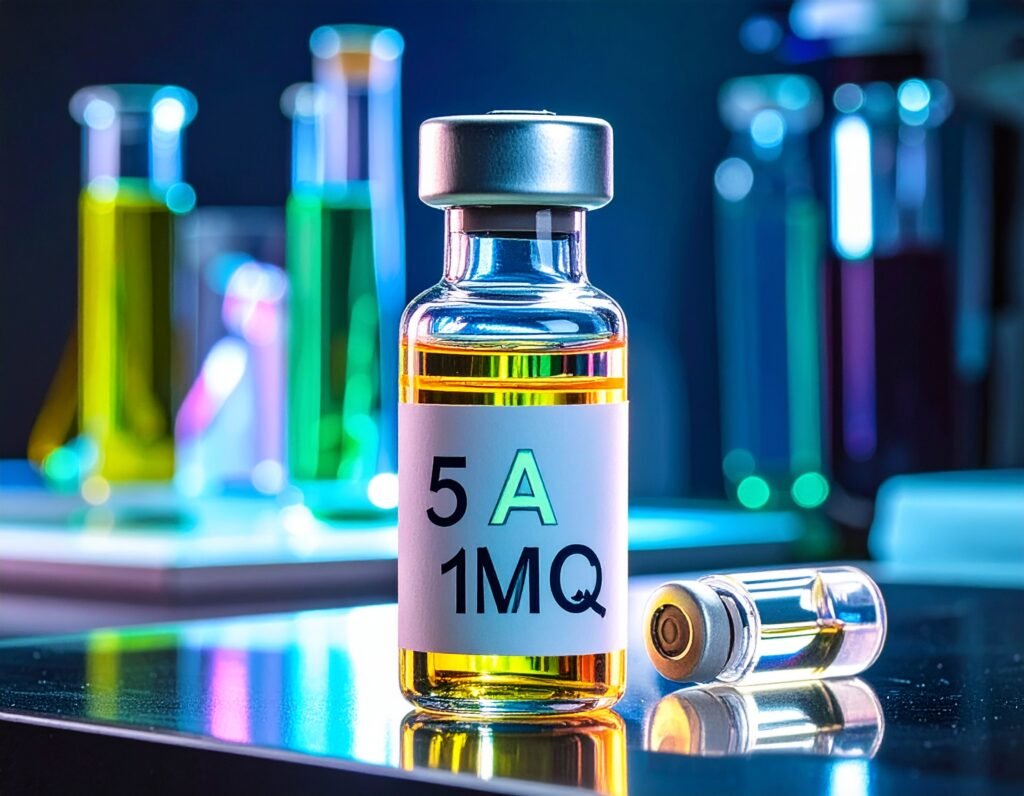
5-Amino-1MQ (10 mg Vial) Dosage Protocol
Quickstart Highlights
5-Amino-1MQ dosage protocols center on this selective, cell-permeable NNMT (Nicotinamide N-methyltransferase) inhibitor studied for its potential to support fat metabolism, preserve lean muscle mass, and elevate intracellular NAD+ levels[1][2]. By blocking NNMT, 5-Amino-1MQ may help restore cellular energy balance and activate SIRT1 pathways associated with metabolic efficiency[3]. This educational protocol presents a subcutaneous injection approach to maximize bioavailability from the limited 10 mg vial format.

Dosing & Reconstitution Guide
Educational guide for reconstitution and daily dosing
Subcutaneous Protocol (2 mL = 5 mg/mL)
| Phase | Daily Dose (mg) | Units (per injection) (mL) |
|---|---|---|
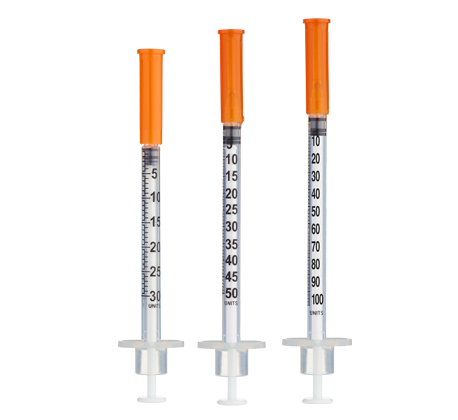
| Days 1–2 (Tolerance) | 2.5 mg once daily | 50 units (0.50 mL) |
| Days 3–4 (Standard) | 5 mg once daily | 100 units (1.0 mL) |
| Alternative BID | 2.5 mg twice daily | 50 units (0.50 mL) × 2 |
Frequency: Inject once or twice daily subcutaneously. Due to the compound’s plasma half-life of approximately 3.8–6.9 hours[4], twice-daily (BID) dosing may provide more sustained NNMT inhibition. Note: A single 10 mg vial provides only 2–4 days of research material at these doses.
Reconstitution Steps
Important: This guide is for educational purposes only and is not medical advice. For research use only. Not for human consumption.
Supplies Needed
Plan based on research duration. Due to the 10 mg vial format, extended protocols require multiple vials.
- 1 week (5 mg/day) ≈ 4 vials
- 2 weeks (5 mg/day) ≈ 7 vials
- 4 weeks (5 mg/day) ≈ 14 vials
- Per week (once daily): 7 syringes
- Per week (BID): 14 syringes
- 4 weeks (once daily): 28 syringes
- 1 week (4 vials): 8 mL → 1 × 10 mL bottle
- 2 weeks (7 vials): 14 mL → 2 × 10 mL bottles
- 4 weeks (14 vials): 28 mL → 3 × 10 mL bottles
- Per week (once daily): 14 swabs
- 4 weeks (once daily): 56 swabs → recommend 1 × 100-count box


Protocol Overview
Concise summary of the subcutaneous regimen.