
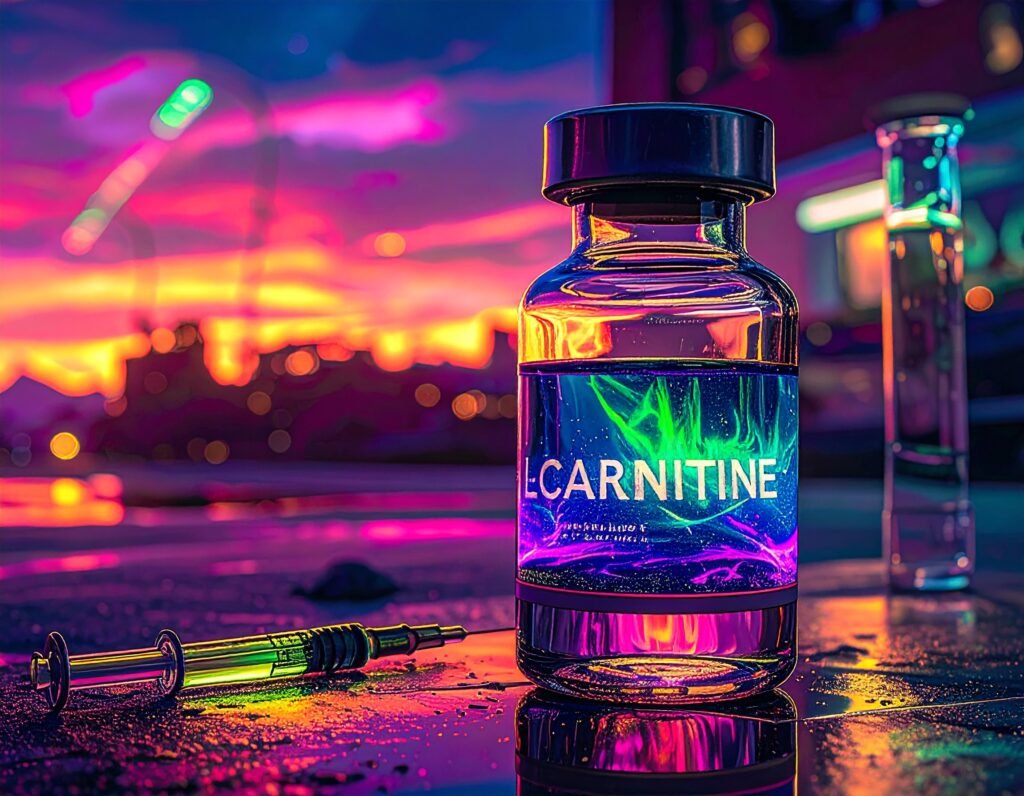
L-Carnitine (200 mg Vial) Dosage Protocol
Quickstart Highlights
L-Carnitine is an amino acid derivative essential for fatty acid transport into mitochondria, where it facilitates β-oxidation and energy production[1]. Subcutaneous administration bypasses intestinal conversion to trimethylamine-N-oxide (TMAO), a metabolite associated with cardiovascular concerns[4], while providing 100% bioavailability compared to 5–18% for large oral doses[3]. This educational protocol presents a once-daily subcutaneous approach optimized for insulin-syringe measurements.

Dosing & Reconstitution Guide
Educational guide for reconstitution and daily dosing
Standard / Gradual Approach (2.0 mL = 100 mg/mL)
| Week | Daily Dose | Units (per injection) (mL) |
|---|---|---|
| Weeks 1–2 | 50 mg | 50 units (0.50 mL) |
| Weeks 3–8 | 100 mg | 100 units (1.0 mL) |
| Weeks 9–12 | 100 mg | 100 units (1.0 mL) |
Frequency: Inject once daily subcutaneously. This 2.0 mL reconstitution provides optimal concentration for convenient dosing: 100 mg maintenance dose = exactly 1.0 mL (100 units)[8]. For advanced protocols requiring 150–200 mg daily, doses above 1.0 mL may be split into two injections at different sites to improve comfort.
Reconstitution Steps
Important: This guide is for educational purposes only and is not medical advice. For research use only. Not for human consumption.
Supplies Needed
Plan based on an 8–16 week daily protocol using 100 mg maintenance dose (most common). If starting with 50 mg titration (Weeks 1–2), subtract ~3–4 vials from totals below.
- 8 weeks (56 days @ 100 mg/day) ≈ 28 vials
- 12 weeks (84 days @ 100 mg/day) ≈ 42 vials
- 16 weeks (112 days @ 100 mg/day) ≈ 56 vials
Note: Each 200 mg vial reconstituted at 2.0 mL provides two 100 mg doses (or four 50 mg doses).
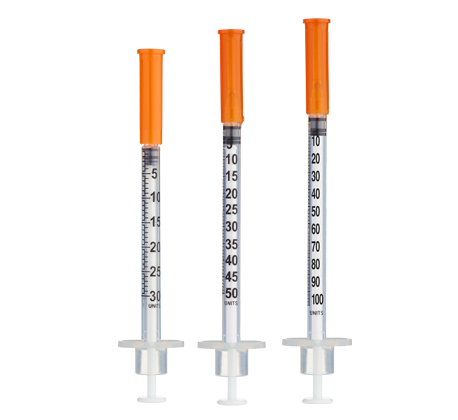
- Per week: 7 syringes (1/day)
- 8 weeks: 56 syringes
- 12 weeks: 84 syringes
- 16 weeks: 112 syringes
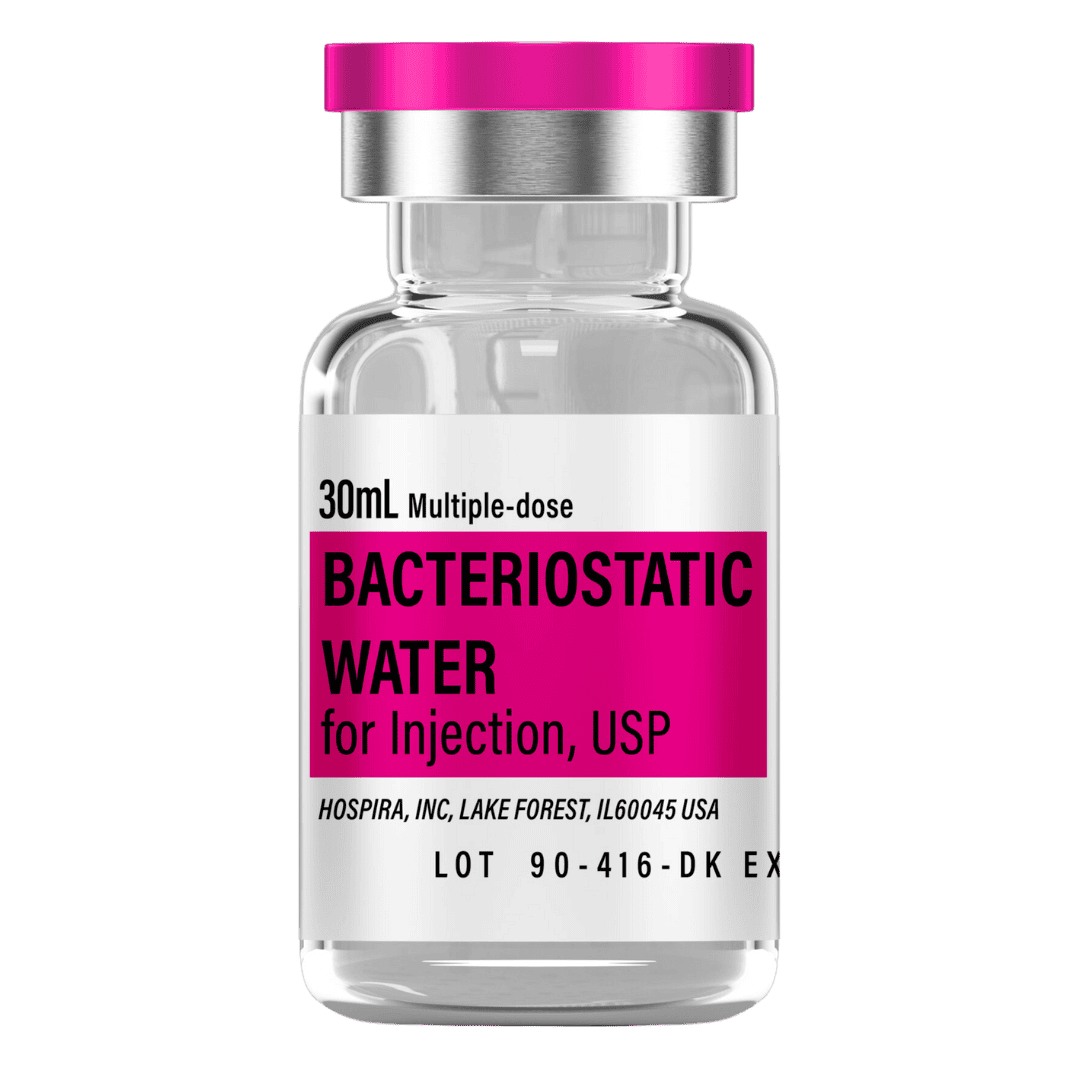
- 8 weeks (28 vials): 56 mL → 6 × 10 mL bottles
- 12 weeks (42 vials): 84 mL → 9 × 10 mL bottles
- 16 weeks (56 vials): 112 mL → 12 × 10 mL bottles
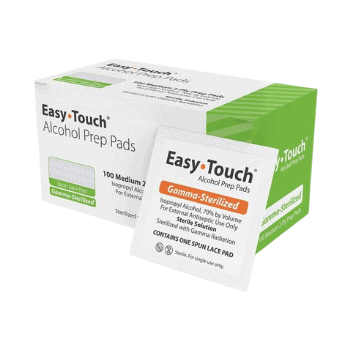
- Per week: 14 swabs (2/day)
- 8 weeks: 112 swabs → recommend 2 × 100-count boxes
- 12 weeks: 168 swabs → recommend 2 × 100-count boxes
- 16 weeks: 224 swabs → recommend 3 × 100-count boxes
Protocol Overview
Concise summary of the once-daily subcutaneous regimen.