

Vesugen (Lys-Glu-Asp) (20 mg Vial) Dosage Protocol
Quickstart Highlights
Vesugen (Lys-Glu-Asp, also known as KED) is a tripeptide bioregulator synthesized at the Saint Petersburg Institute of Bioregulation and Gerontology[1]. Research suggests it may support vascular endothelial cell proliferation through epigenetic regulation of Ki-67 gene expression[2]. This educational protocol presents a once-daily subcutaneous approach using a practical dilution for clear insulin-syringe measurements.
Dosing & Reconstitution Guide
Educational guide for reconstitution and daily dosing
Standard / Gradual Approach (3 mL = ~6.67 mg/mL)
| Week | Daily Dose (mcg) | Units (per injection) (mL) |
|---|---|---|
| Week 1 | 500 mcg (0.5 mg) | 7.5 units (0.075 mL) |
| Week 2 | 1000 mcg (1.0 mg) | 15 units (0.15 mL) |
| Week 3 | 1500 mcg (1.5 mg) | 22.5 units (0.225 mL) |
| Weeks 4–8+ | 1500–2000 mcg (1.5–2.0 mg) | 22.5–30 units (0.225–0.30 mL) |
Frequency: Inject once daily subcutaneously. For ≤10-unit (≤0.10 mL) administrations, consider 30- or 50-unit insulin syringes for improved readability. Note that Week 1 dosing falls at 7.5 units; a 50-unit syringe with 0.5-unit graduations improves accuracy.
Reconstitution Steps
Important: This guide is for educational purposes only and is not medical advice. For research use only. Not for human consumption.
Supplies Needed
Plan based on an 8–16 week daily protocol with gradual titration (targeting ~1500 mcg/day maintenance).
- 8 weeks (~84 mg total) ≈ 5 vials
- 12 weeks (~126 mg total) ≈ 7 vials
- 16 weeks (~168 mg total) ≈ 9 vials
- Per week: 7 syringes (1/day)
- 8 weeks: 56 syringes
- 12 weeks: 84 syringes
- 16 weeks: 112 syringes
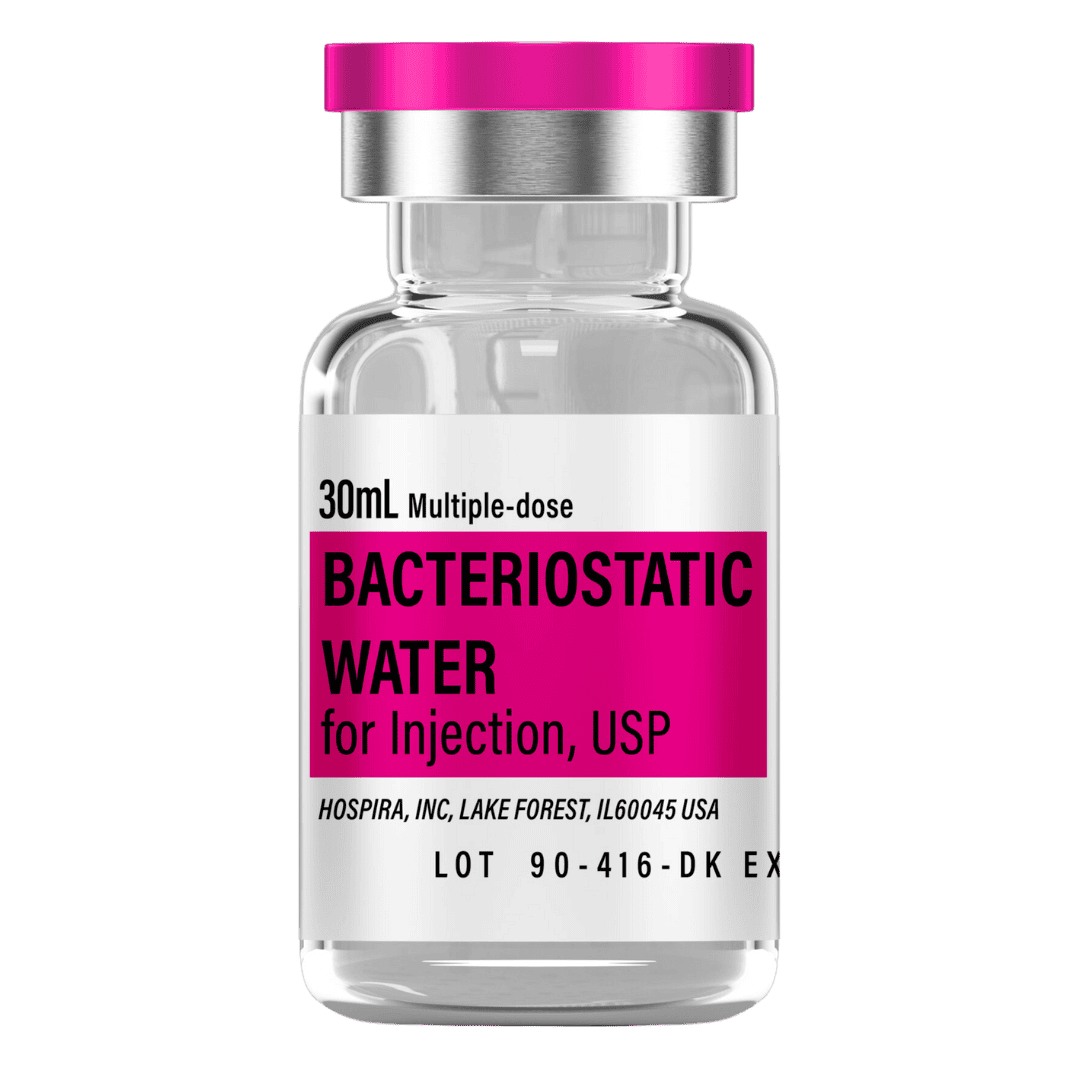
- 8 weeks (5 vials): 15 mL → 2 × 10 mL bottles
- 12 weeks (7 vials): 21 mL → 3 × 10 mL bottles
- 16 weeks (9 vials): 27 mL → 3 × 10 mL bottles
- Per week: 14 swabs (2/day)
- 8 weeks: 112 swabs → recommend 2 × 100-count boxes
- 12 weeks: 168 swabs → recommend 2 × 100-count boxes
- 16 weeks: 224 swabs → recommend 3 × 100-count boxes
Protocol Overview
Concise summary of the once-daily regimen.